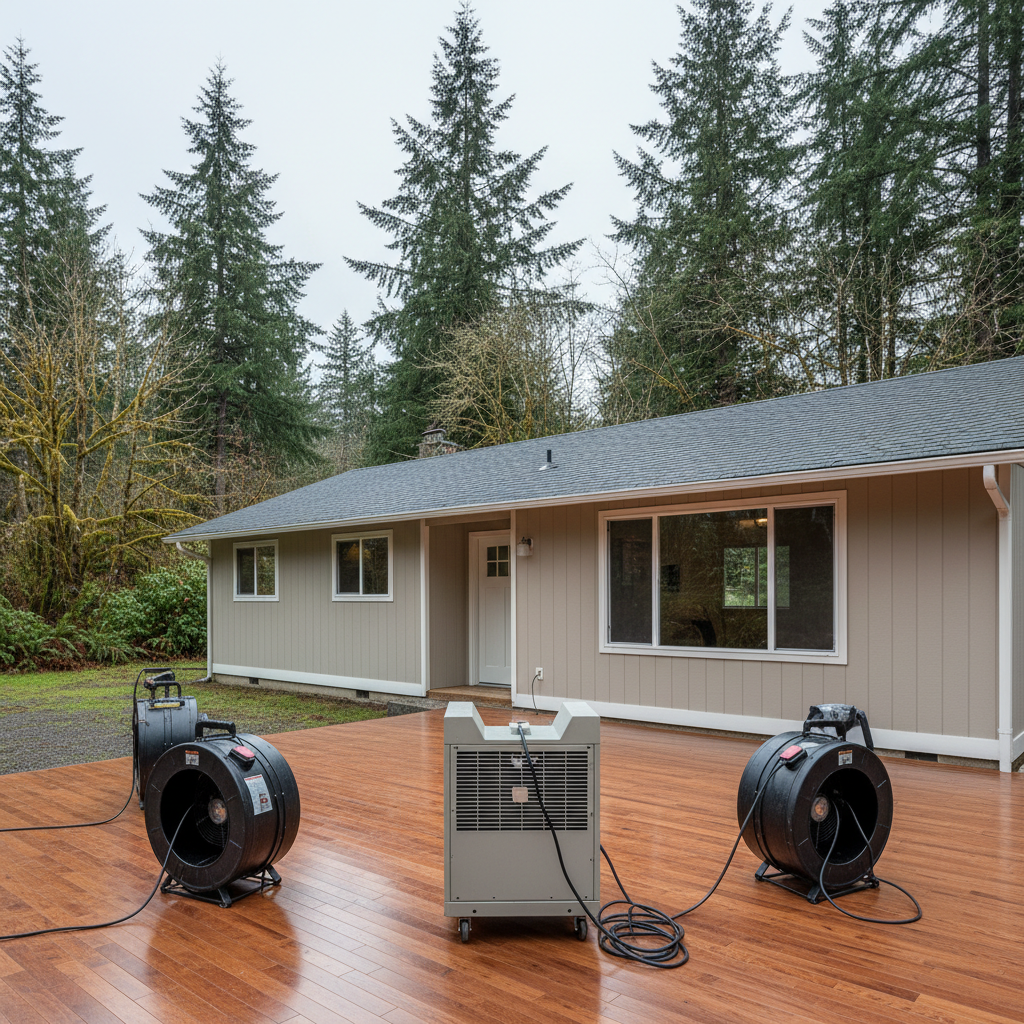
Drying out a water-damaged room involves much more than setting up a fan and hoping for the best. When moisture gets trapped in the subfloors or behind drywall around Littlerock, you need heavy commercial gear to prevent rot and mold. Figuring out what that is going to cost can feel stressful, especially when you are already dealing with a plumbing leak or a flooded crawlspace.
Blue Ridge Restoration Company has completed many structural drying and dehumidification jobs across the Littlerock area, and most of these projects run between $1,000 and $3,500 total. For a single localized room affected by a supply line break, homeowners might only pay $800 to $1,500. If you are dealing with a widespread issue across multiple rooms or a damp lower level after heavy winter rains, the bill usually lands closer to $2,500 to $5,000.
What Actually Drives the Price?
- Equipment Quantity and Type: Standard commercial refrigerant units cost less to run than heavy-duty LGR (Low Grain Refrigerant) dehumidifiers or specialized desiccant systems required for tight crawlspaces in Littlerock.
- Duration of the Run: Most standard setups run for 3 to 5 days. If your subfloor or framing holds onto moisture longer, extra days add to the equipment rental and monitoring labor.
- Square Footage and Layout: Open spaces dry faster than chopped-up layouts or properties with thick hardwood floors that demand specialty injection drying systems.
What is Included in a Legitimate Quote?
When you get an honest estimate from a local pro, it should not be a flat mystery number. A professional quote includes dropping off the equipment, setting up industrial air movers and dehumidifiers, daily site visits to check moisture meters, and recording daily atmospheric logs. Blue Ridge Restoration Company makes sure you know exactly what is plugged in and why it is there. Disposal or containment setup might add a bit if we have to deal with contaminated water, but the core drying phase relies heavily on the daily equipment burn time and technician oversight.
How to Avoid Overpaying
The easiest way to waste money in this business is letting equipment run past the point of saturation drop. Unscrupulous operators might leave units plugged in for ten days when the structure reached its dry standard on day four. Always ask for daily moisture meter readings mapped against your framing's dry standard. If a contractor cannot show you the numbers proving the wood and drywall are still giving off moisture, it is time to ask questions. Keep an eye out for rogue companies that bill exorbitant per-day rates without providing daily monitoring. Good work relies on science and measurement, not just keeping fans spinning until you get a heavy invoice.